Every experienced Dubai property investor has walked through a villa that most buyers scrolled straight past — tired, in original developer condition, sitting on the market longer than comparable listings, priced accordingly. That gap between what a villa looks like today and what it could realistically become is where value-add returns actually live. It's also where inexperienced investors lose money, because the difference between a profitable renovation and an expensive lesson comes down to how honestly the scope and budget were assessed before the purchase, not after demolition has started.
This guide sets out a practical framework for evaluating and renovating a distressed villa as an investment, not a home to live in — a genuinely different decision, as covered in our broader guide to buy-renovate-sell investing.
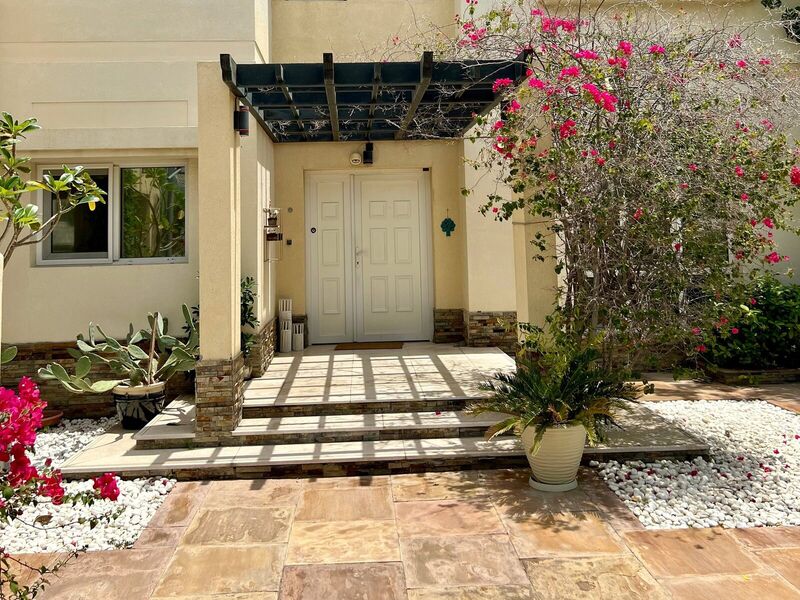
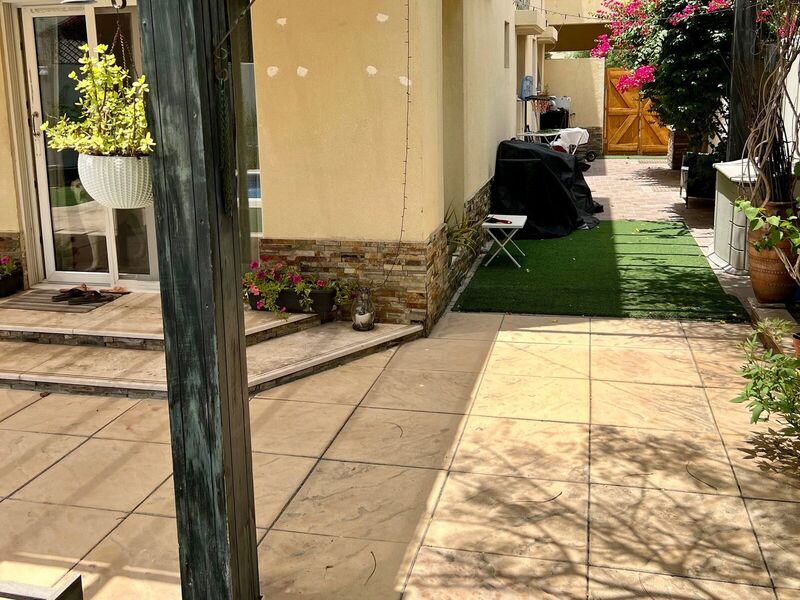
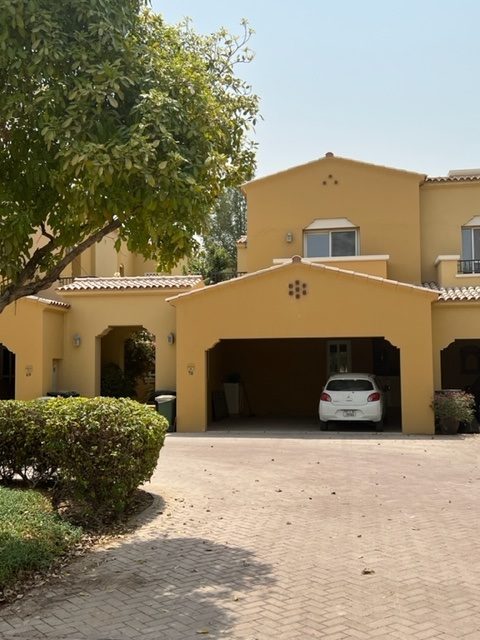
What "distressed" actually looks like in Dubai's villa market
Dubai doesn't have the volume of foreclosed or derelict housing stock that "distressed asset" implies in some Western markets. Here it usually means: a villa still in original developer condition after 15-20+ years; a long-tenanted or absentee-owner property where maintenance was deferred rather than neglected; or a property tied to a motivated seller — relocation, inheritance, divorce, or financial pressure — prioritising a fast sale over maximum price.
The usual signals are practical: listing language like "needs some updating" or "priced to sell," days-on-market above the community average, agent photography that avoids certain rooms, and a gap between asking price and recently sold, renovated comparables nearby. None of this means the property is a bad buy — it usually means the market has already priced in the work needed, and your return depends on doing that work for meaningfully less than the discount on offer.
Assess the scope of work before you make an offer, not after
The single biggest mistake investors make is treating a five-minute viewing, or a set of agent photos, as a substitute for a proper condition assessment. Cosmetic wear is easy to spot and cheap to fix — tired paint, dated tiling, an old kitchen. What actually determines whether a distressed villa is a good deal is what you can't see in a photo: the age of the electrical distribution board and wiring, plumbing and waterproofing (especially around bathrooms, roofs, and planter boxes), AC units and ductwork, and any structural cracking. It's also worth checking for unpermitted alterations — an extended majlis, a converted garage, a moved wall — since these can complicate your own renovation permit later.
Wherever possible, bring someone who can read a villa's condition properly to a serious viewing, or make your offer conditional on one. Our guide to when a villa needs a full renovation versus a refresh helps separate genuinely structural issues from cosmetic ones.
💡 See what a full transformation actually involves
Our documented case studies — The Meadows villa and Palmera 4 in Arabian Ranches — show real, unedited before-and-after documentation of villas in original, dated condition. They're a useful reference for calibrating what a genuine structural and MEP renovation involves and costs, before you buy on an optimistic estimate.
Budgeting for the unknowns: contingency is not optional
Distressed properties carry more genuine uncertainty than a straightforward refresh, because you often can't fully verify MEP and structural condition until walls or floors are opened. A standard renovation budget carries some contingency; on a distressed property, that contingency needs to be meaningfully larger and held in reserve, not allocated to finishes upfront. This is also where holding costs quietly erode returns — every extra month of works is a month of service charges and financing cost, which is part of why deferred maintenance compounds in cost the longer it's left.
Sequencing capital sensibly matters too: avoid committing your full budget and timeline before an intrusive check — opening a wet-area wall, inspecting the DB board, sampling a ceiling void — confirms what you're actually dealing with.
Cosmetic refresh vs structural renovation: budget tiers for distressed villas
The single most useful thing you can do early is establish which tier a distressed villa actually falls into. The gap between these tiers is the entire game for an investor, and it's rarely obvious from a viewing alone.
| Tier | Typically involves | Budget (4,000 sqft villa) | Best suited to |
|---|---|---|---|
| Cosmetic refresh | Paint, flooring, kitchen & bathroom cosmetic updates, landscaping tidy-up | AED 250,000 – 400,000 | Dated but structurally and MEP-sound villas |
| Targeted renovation | Cosmetic scope plus selective MEP work (partial rewiring, AC replacement, wet-area waterproofing), updated kitchen & bathrooms | AED 450,000 – 750,000 | Villas with isolated, identified deferred-maintenance issues |
| Full structural & MEP renovation | Complete rewire and replumb, full waterproofing overhaul, possible layout changes, full kitchen/bathroom rebuild, pool and landscaping | AED 800,000 – 1,400,000+ | Genuinely neglected stock or properties with confirmed structural/systemic issues |
These figures assume a full-villa scope; a partial renovation costs proportionally less. Our Renovation Cost Calculator can give you a working number once you know your target villa's size and likely tier.
Common pitfalls investors run into
- Underestimating MEP and structural scope — invisible in photos, and only obvious once demolition starts, by which point it's a variation order, not a negotiation.
- Buying on location and price alone, without a walkthrough or professional opinion, then discovering the "discount" was smaller than the real scope of work.
- Skipping permit and NOC due diligence — unpermitted alterations from a previous owner can delay your own renovation permit.
- Over-improving relative to the surrounding community, spending beyond what comparable resale listings nearby can support.
- Underestimating holding costs — service charges, finance costs, and a vacant asset that erode returns fastest when a timeline slips.
- Choosing the cheapest quote without verifying licensing, insurance, and a defined scope — riskier still on a property where the scope was already uncertain.
⚠ A pattern worth watching for
On distressed properties, unusually low renovation quotes more often reflect an incomplete scope than genuine efficiency, since the contractor hasn't fully assessed what's behind the walls either. Ask what the quote assumes about MEP and structural condition, and what happens to the price if that assumption is wrong.
Working with a renovation partner as an investor, not a homeowner
Your priorities as an investor differ from someone renovating to live in the villa for the next decade, and it's worth being explicit about that with whoever you work with. You need a fixed, clearly defined scope and price once due diligence is complete, not an open-ended arrangement. You need a contractor who gives a straight answer at the walkthrough about what's cosmetic and what's structural, rather than what's easiest to hear. And you need realistic timelines, since every extra month directly affects your holding cost and your return.
Reviewing real project documentation, not marketing renders, is the most reliable way to judge whether a partner can deliver at the standard your numbers depend on. If you're weighing a specific distressed villa against your target return, our team can walk the scope with you.
Weighing a distressed villa purchase?
Our Renovation Cost Calculator gives you a realistic number for your target scope, so you can stress-test the numbers before you make an offer.
Try the Cost CalculatorAlso worth reading alongside this one: our buy-renovate-sell investment guide and our breakdown of full renovation vs refresh decisions.
Frequently asked questions
How do I tell if a distressed villa in Dubai is a good renovation investment?
Compare the discount you're being offered against recently sold, renovated comparables in the same community, then get a realistic scope-of-work assessment before you factor in renovation cost. If the discount comfortably covers a properly budgeted renovation, including contingency, and still leaves margin against sold prices, it's worth pursuing. If the numbers only work with a best-case budget, the margin for error is too thin.
How much contingency should investors budget for a distressed villa renovation?
Plan for roughly 20-25% contingency above a fixed-scope quote on a distressed property, versus around 10-15% on a straightforward refresh. Distressed villas more often hide MEP, waterproofing, or structural issues that only become visible once walls and floors are opened, so the extra buffer reflects genuine uncertainty, not padding.
Should investors buy a distressed Dubai villa without a professional walkthrough first?
It's a significant risk. Agent photos and a short viewing can't reliably show the age and condition of MEP systems, waterproofing, or any unpermitted alterations that could complicate renovation permits later. Wherever possible, arrange a proper walkthrough with a renovation professional before finalising an offer, or make the offer conditional on one.