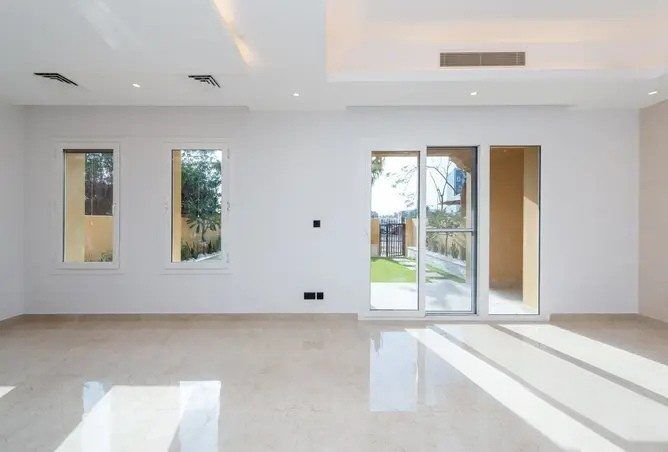

Large glass doors and windows facing a garden or pool are one of the most desirable features in a Dubai villa — and one of the most demanding on your home's cooling system and interior finishes. Untreated single-pane clear glass lets through the full force of Dubai's sun: significant solar heat gain that pushes your AC to work harder, and near-constant UV exposure that fades floors, furniture and artwork over time. The good news is that treating existing glazing, rather than replacing it, solves most of this at a fraction of the cost.
Solar window film
Solar film is a thin polyester film applied directly to the inside face of existing glass — the most cost-effective way to dramatically improve how a window performs without touching the frame or glazing itself. Quality ceramic films can block up to around 99% of UV rays and reduce solar heat gain through the glass by roughly 40-60%, depending on the film specification. Ceramic films are worth specifically asking for over cheaper dyed films: they don't interfere with WiFi or mobile signal, resist discolouration far better over time, and typically carry a 10-15 year manufacturer warranty.
Smart glass (electrochromic)
Smart glass tints electronically on demand — either via a wall switch or an automatic sensor responding to sunlight — shifting from clear to a private, heat-blocking tint in seconds. It's a genuinely impressive feature, but it comes at a significant multiple of solar film's cost, and because it requires wiring into the glazing at installation, it's realistically only practical to specify during a full renovation, not as a later add-on. Most of our clients reserve it for a specific statement space — a home cinema, a primary suite, or a pool house wall — rather than the whole villa.
Double glazing and Low-E coatings
For renovations that involve replacing windows entirely rather than treating existing glass, Low-E (low-emissivity) coated double glazing is worth considering. The coating reflects infrared heat back outward while still allowing visible light through, and the double-glazed air gap adds insulation value on top. It's a larger investment than film or smart glass, reserved for projects where the window frames themselves are already being replaced.
💡 South and west-facing glass benefits most
Pool-facing walls and west-facing living rooms take the most direct afternoon sun in a Dubai villa and see the biggest heat gain — prioritise solar film here first if you're treating the villa room by room rather than all at once.
⚠ Cheap dyed film degrades fast in Dubai sun
Budget dyed window films can bubble, peel or turn a visible purple tint within just 2-3 years under intense Dubai UV exposure. Always specify a ceramic or metalized film backed by a manufacturer's warranty rather than the cheapest option on offer.
What actually reduces your AC bill
Window treatment is one part of a broader heat-management strategy alongside reflective exterior paint and correct orientation and shading. None of these alone solves a villa's summer heat load, but together — film or smart glass on the glazing, a light, UV-stable exterior finish, and well-specified MEP and AC systems — they meaningfully reduce both cooling costs and the fading that damages wood flooring and furnishings near large windows over the years.
What to expect during installation
Solar film installation on an occupied villa is comparatively quick and low-disruption — a professional installer wets the glass with an application solution, applies the film, and squeegees out air bubbles and excess liquid, typically finishing a full villa's worth of glazing within one to two days. The film needs a short curing period, often one to two weeks, during which minor haziness or small trapped moisture pockets are normal and will clear on their own; this is worth mentioning to homeowners who see it and worry the job was done poorly. Smart glass, by contrast, is only realistically installed as part of a full window or glazing replacement, since the electrochromic layer is built into the glass unit itself at manufacture — it cannot be retrofitted onto existing panes the way film can, which is the main reason it's specified during a renovation rather than added afterward.
Planning a Villa Renovation with Large Glazing?
We can advise on solar film, smart glass or full window replacement as part of your renovation scope.
Try the Cost CalculatorFrequently asked questions
Does solar window film really reduce heat in a Dubai villa?
Yes. Quality ceramic solar film can block up to around 99% of UV rays and reduce solar heat gain through glass by roughly 40-60% depending on the film specification, which noticeably lowers surface temperatures near windows and reduces AC load on that room.
Is smart glass worth it compared to solar film?
Smart (electrochromic) glass costs significantly more than solar film and is usually reserved for statement areas like a home cinema or primary suite where on-demand tinting is a real lifestyle feature. For most windows, solar film delivers the bulk of the heat and UV benefit at a fraction of the cost.
How long does solar window film last in Dubai?
A quality ceramic or metalized solar film with a manufacturer's warranty typically lasts 10-15 years in Dubai's climate. Cheaper dyed films can degrade, bubble or discolour within 2-3 years of intense UV exposure, so film quality matters more here than in milder climates.