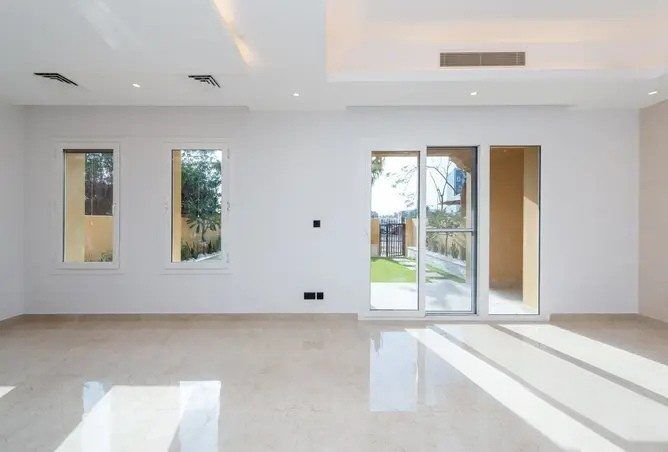
Paint failure in Dubai rarely comes from poor workmanship — it usually comes from specifying a product designed for a different climate. Between an intense, near-constant UV index, facade surface temperatures that can exceed 60°C in direct summer sun, and interiors kept artificially dry by air conditioning, Dubai asks more of a coat of paint than most parts of the world.
Interior paint
Inside a Dubai villa, the main considerations are less about heat and more about air quality and daily wear. With homes sealed and air-conditioned most of the year, low-VOC, low-odour formulations matter for indoor air quality — this is now standard on any reputable premium interior paint. Washability matters too: kitchens, hallways and children's rooms benefit from a scrubbable eggshell or satin finish rather than flat matte, which marks more easily and is harder to clean without leaving a sheen difference. In bathrooms and any room with limited ventilation, a paint with a built-in mould and mildew inhibitor is worth the small premium — Dubai's ambient humidity, especially in coastal and garden-facing rooms, is enough to support mould growth on ordinary paint over time.
Using current Dubai market pricing, standard interior paint runs AED 8-15 per sq ft, premium paint AED 15-25 per sq ft, wallpaper AED 25-45 per sq ft, and statement feature walls (textured finishes, panelling-effect paint, or designer wallcoverings) AED 40-80 per sq ft.
Exterior paint
Exterior paint has a much harder job. It needs to be UV-stable — standard acrylic emulsion will chalk (develop a powdery surface as the binder breaks down) within a couple of years under direct Dubai sun, while a UV-resistant, high-quality exterior acrylic or elastomeric coating is formulated specifically to resist that breakdown. Elastomeric and reflective (cool-roof style) coatings also help by staying more dimensionally flexible through daily heat cycling and by reducing how much heat the facade absorbs in the first place, which can modestly reduce cooling load on rooms behind that wall.
Colour choice affects longevity more than most homeowners expect. Darker facade colours absorb significantly more solar radiation, run hotter, and fade and chalk faster than lighter tones — one reason the classic Gulf palette of creams, sands and soft greys isn't purely aesthetic; it's also the more durable choice.
💡 Ask for a reflective or elastomeric exterior coating
These formulations resist UV breakdown better than standard acrylic emulsion and can meaningfully extend the interval between repaints on west and south-facing facades — the walls that take the harshest sun exposure each day.
⚠ Never paint an exterior wall in peak midday heat
Applying paint to a facade at 45°C+ causes it to skin over before it can properly bond and cure, leading to poor adhesion and early peeling. Exterior painting in Dubai should happen early morning, evening, or during the cooler November-March window.
How long should villa paint actually last?
Expect an interior repaint every 5-7 years under normal conditions, and an exterior repaint every 3-5 years given Dubai's UV exposure — noticeably shorter than the 7-10 year exterior repaint cycle common in milder climates. A UV-stable coating and lighter colour palette can push you toward the longer end of that range.
Primer and prep matter more than the topcoat
A significant share of premature paint failure in Dubai traces back to surface preparation rather than the paint itself. Villa exteriors carry years of accumulated dust, sand and salt residue near coastal communities, and painting directly over that without a proper wash-down and primer coat means the new paint is only ever as well-bonded as the dirty layer beneath it. Internally, freshly plastered or previously wallpapered walls need the correct primer to seal porosity evenly — skip it, and the topcoat can absorb unevenly, leaving visible patchiness known as "flashing" once it dries. A specified primer coat adds a modest amount to the paint budget but is usually the difference between a repaint that lasts the full 5-7 years and one that needs touching up within eighteen months.
Paint isn't the only defence against Dubai's heat and UV — for glazed walls and large windows, pairing your exterior colour strategy with solar window film reduces both the heat load on interior finishes and UV fading of floors and furniture. If your renovation also involves timber flooring near large windows, our guide to engineered wood flooring in Dubai's climate covers the same UV fading risk from the flooring side.
Planning a Full Repaint or Renovation?
Our villa renovation team specs UV-stable, climate-appropriate paint as standard. Get a real number for your project.
Try the Cost CalculatorFrequently asked questions
Why does exterior paint fade so fast in Dubai?
Dubai's UV index is high year-round, and dark, unfiltered sun breaks down paint binders and pigments far faster than in milder climates. Facades also cycle through large daily temperature swings, which stresses the paint film and accelerates chalking and cracking on standard formulations.
How often should you repaint a villa exterior in Dubai?
Most Dubai villa exteriors need repainting every 3-5 years, compared with 7-10 years in milder climates, due to intense UV exposure. Using a UV-stable acrylic or elastomeric coating can push this toward the longer end of that range.
What is the best paint finish for a humid Dubai bathroom?
A washable satin or eggshell finish with a built-in mould inhibitor performs best in humid, poorly ventilated bathrooms. Fully matte finishes look elegant but are harder to wipe clean and can show water marks more readily over time.