Whether your renovation included a full pool resurfacing, new tiling and coping, or just an upgrade to the filtration and equipment, a freshly renovated pool doesn't behave quite like the one it replaced — at least not for the first few weeks. New plaster and finishes need a careful curing period, and once that's done, Dubai's heat, sun, and hard water create an ongoing maintenance rhythm that's genuinely different from cooler climates.
This guide covers both: what to do immediately after a pool renovation, and the basics of keeping it in good shape through a Dubai summer and beyond.
The first 2-4 weeks: the curing period
If your pool was replastered, resurfaced, or retiled, the new finish needs time to cure properly before it's treated like a normal, established pool. During this period:
- Keep filtration running continuously, rather than on a normal cycle, to keep water circulating evenly across the new surface.
- Brush the pool surface daily to prevent plaster dust and mineral deposits from settling and staining the new finish.
- Hold off on shock chlorination and aggressive chemical treatments until your contractor confirms the surface has cured — early exposure can damage a fresh finish.
- Maintain a consistent water level, since large fluctuations during curing can affect how evenly the new surface sets.
Always follow the specific curing timeline your contractor provides for the exact finish used — plaster, pebble, or tile finishes cure at slightly different rates.
💡 Ask for the curing schedule in writing
A good pool contractor hands over a written curing schedule at handover — what to do (and avoid) day by day for the first few weeks. If you weren't given one, ask for it directly rather than guessing at timing.
Weekly and monthly chemical balance
Once your pool is past the curing period, the ongoing routine centres on keeping chlorine, pH, alkalinity, and calcium hardness within range — particularly calcium hardness, given how mineral-heavy Dubai's water supply is. Test with strips weekly even if a pool company visits regularly, so you can flag any drift between their visits rather than only finding out at the next scheduled check. We cover this as part of the broader weekly routine in our post-renovation maintenance checklist.
Why Dubai's heat changes the maths
Intense UV exposure breaks down free chlorine considerably faster than in milder climates, meaning a balance that holds for a week elsewhere might need topping up every few days during peak Dubai summer. High temperatures also accelerate evaporation — expect to top up water levels more frequently — and warm water is a more favourable environment for algae growth if chlorine levels are allowed to drift low even briefly.
Filter and pump upkeep
Dubai's airborne dust means pool filters clog faster than in less dusty climates, especially after windy days or a sandstorm. Backwash or clean cartridge filters more frequently than the manufacturer's baseline guidance suggests if you notice reduced flow or cloudier water. Listen for any change in pump noise or a drop in circulation strength — both are early signs worth investigating before they become bigger equipment issues.
Tile, coping and waterline care
The waterline — where water level sits against the tile — is where hard water mineral deposits show up most visibly over time, usually as a chalky white line. Regular waterline cleaning with a pool-safe descaler prevents this from building up into a stubborn stain. If your pool deck uses natural stone coping, it needs the same sealing attention as any other outdoor natural stone — see our garden and landscaping maintenance guide for how outdoor hardscaping should be cared for.
⚠ Cloudy water isn't always a chemical problem
Persistent cloudiness despite balanced chemicals often points to a filtration issue — a filter that needs cleaning, a pump not running long enough, or reduced flow from a partial blockage — rather than something you can fix by adding more chemicals. If balancing doesn't clear it within a day or two, check the equipment before adding anything further.
When to call a professional vs handle it yourself
Routine testing, topping up chemicals within recommended ranges, brushing, and skimming are all fine for a homeowner to manage. Equipment faults, persistent chemical imbalances that don't respond to correction, visible cracking or staining on the pool surface, or anything related to the curing period specifically should go to your pool contractor or a specialist pool company rather than being handled through trial and error.
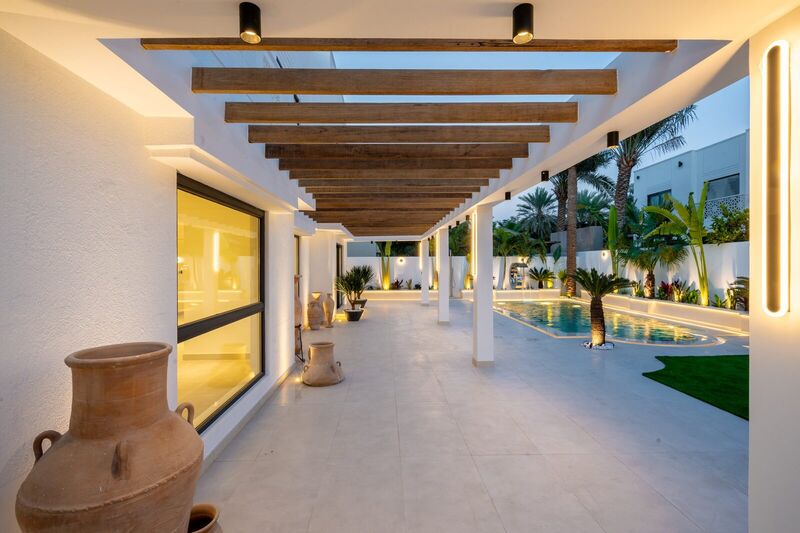
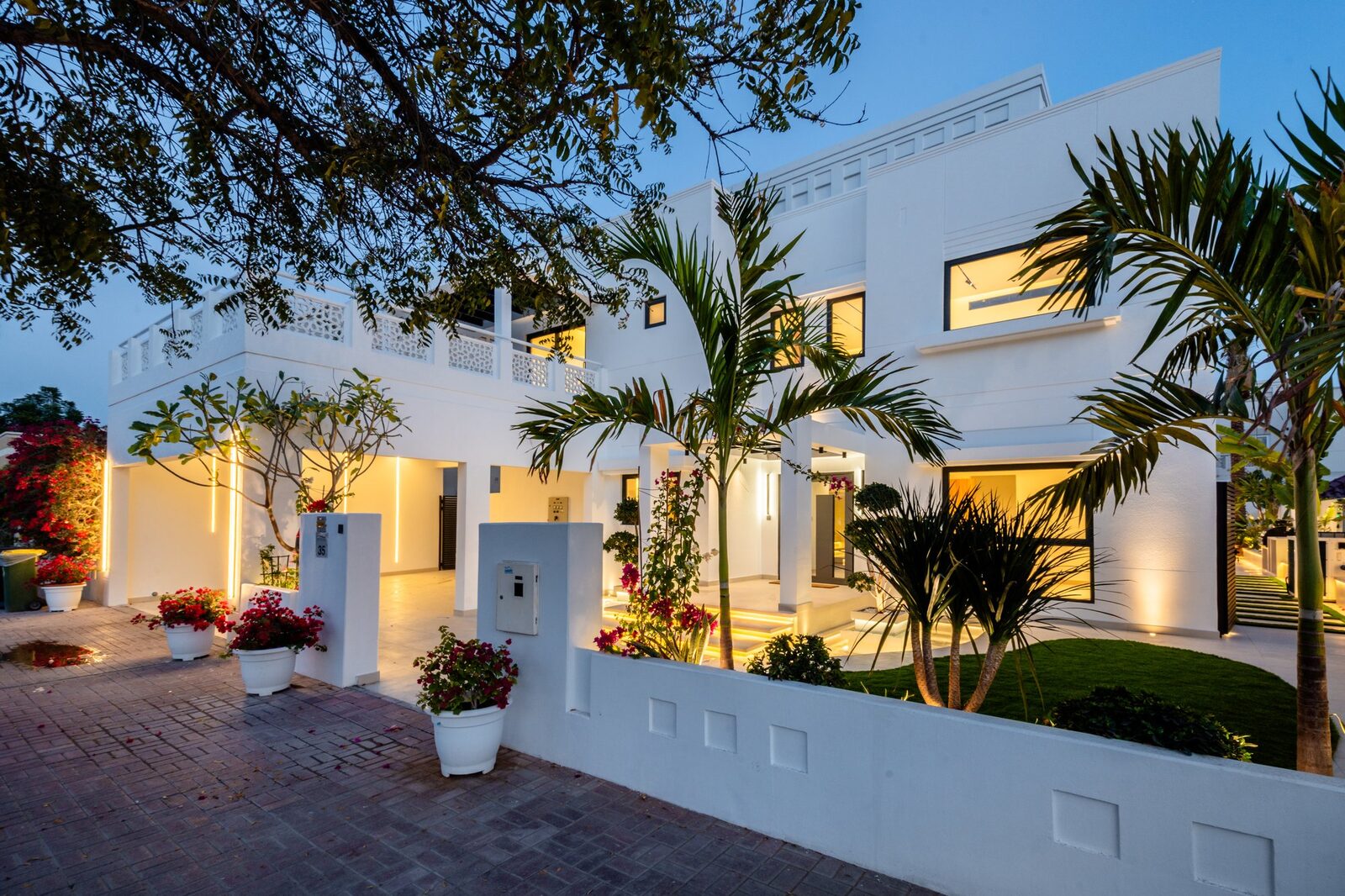
The pool at our Meadows villa renovation was part of a full outdoor renovation designed around exactly this kind of year-round Dubai use — if you're planning a pool renovation and want to understand what ongoing care it will realistically need, it's worth discussing before the project starts, not after.
Renovating or Resurfacing a Pool?
We hand over a written curing schedule and care guide with every pool project, specific to the finish and equipment installed — not a generic PDF.
Explore Pool RenovationFor how pool care fits into your broader summer preparation, read our seasonal maintenance guide for Dubai villas, and if you'd rather hand this whole routine to a professional year-round, see Annual Maintenance Contracts: Are They Worth It in Dubai?
Frequently asked questions
How long does a renovated pool need to cure before normal use?
Newly plastered or resurfaced pool finishes typically need 2 to 4 weeks of careful curing before they're treated as a normal pool — running filtration continuously, brushing daily, and avoiding early shock chlorination, which can damage a fresh surface. Always follow your contractor's specific curing instructions for the finish used.
Why does Dubai's heat affect pool chemical balance so much?
Intense UV breaks down chlorine faster than in milder climates, and high temperatures accelerate evaporation and algae growth. A chemical balance that holds for a week in cooler weather may need checking every few days during peak summer to stay in range.
Do I still need to check my pool if I use a pool maintenance company?
Yes, at least a quick visual and test-strip check between professional visits. Catching a chemical imbalance or a clogged skimmer basket a few days early, rather than waiting for the next scheduled visit, prevents small issues from turning into algae blooms or equipment strain.