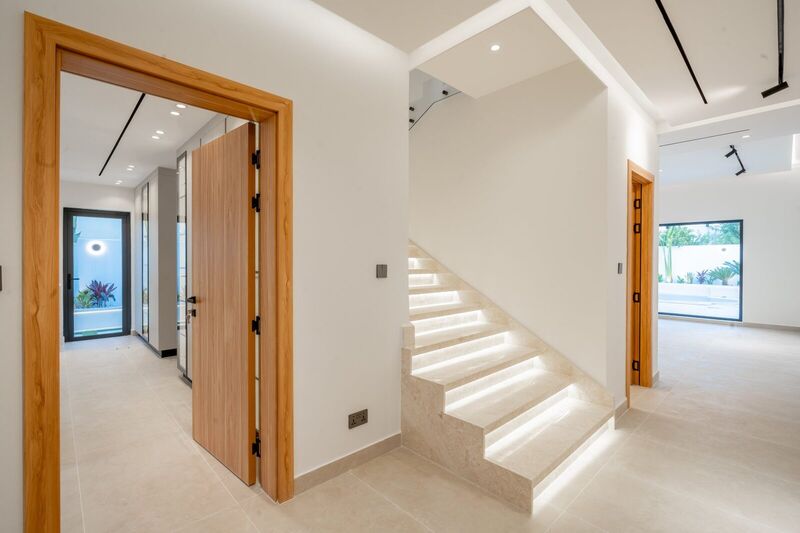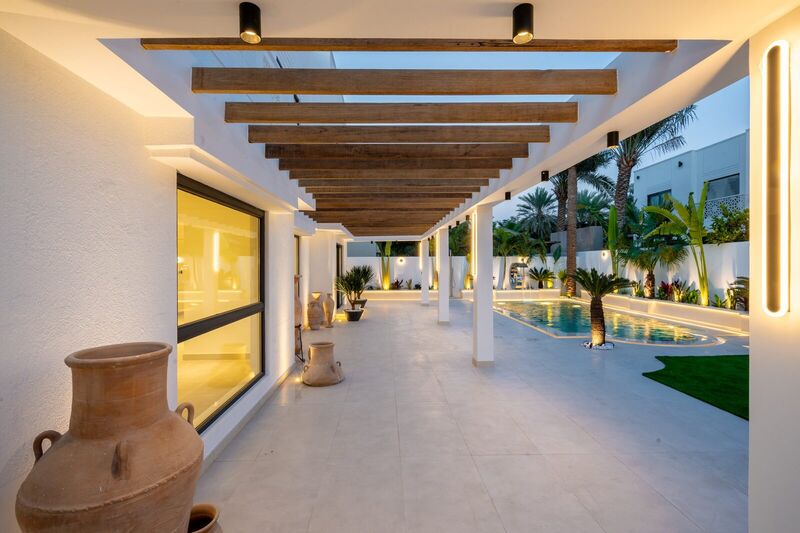
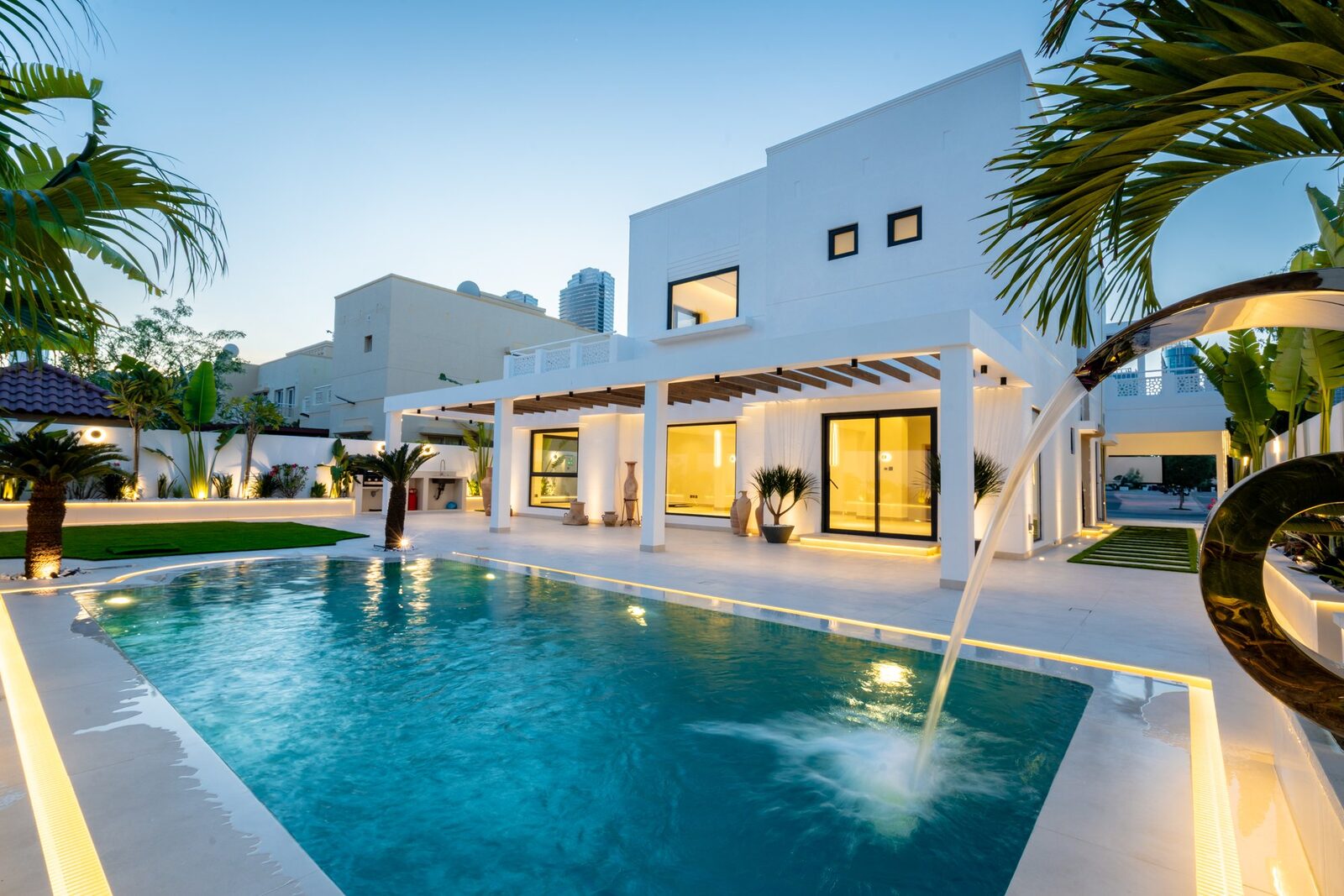
Walk through a dozen newly renovated villas in Dubai this year and a pattern emerges quickly: the stark, all-white, cold-lit minimalism that dominated the last decade is giving way to something warmer, more textural, and more considered. It isn't a rejection of restraint — it's restraint applied with better materials, better light, and a lot more thought about how the space actually feels to live in, not just photograph.
Below are the interior design trends we're seeing repeatedly across renovation briefs in The Meadows, Arabian Ranches, Emirates Hills and Dubai Hills Estate in 2026, along with the specific materials, layouts and lighting decisions behind each one.
1. Warm minimalism replaces stark minimalism
Minimalism hasn't gone away, but its temperature has changed. Where 2018-2022 minimalism leaned on glossy white lacquer, high-gloss porcelain and cool 4000K downlighting, 2026 minimalism is built from matte, tactile surfaces — honed limestone, brushed oak, bouclé upholstery — lit at 2700-3000K to read as warm rather than clinical. The floor plan logic is the same as before: fewer decorative objects, cleaner sightlines, joinery that hides clutter. What's different is the material palette underneath it. This is close cousin to the Japandi approach to Dubai villa design, which blends Japanese restraint with Scandinavian warmth and is worth reading if you're drawn to this pared-back look.
2. Departure from all-beige palettes
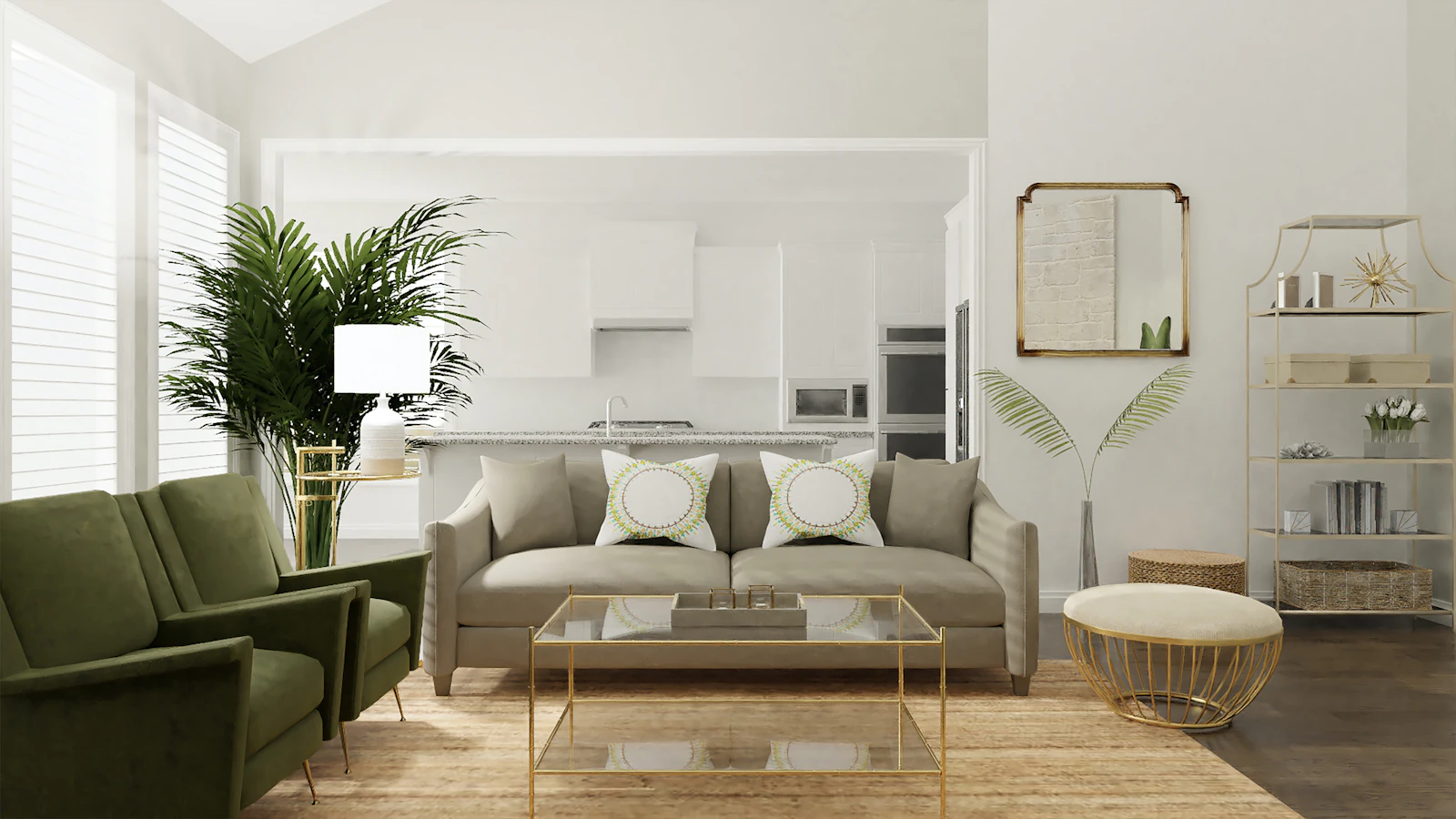
The uniform beige-on-beige villa — sand walls, sand tile, sand sofa — is losing ground. It's being replaced by tonal layering: a warm neutral base (taupe, clay, warm greige) built up through two or three related shades, then punctuated with one or two deliberate accent moments. We're specifying emerald green joinery on kitchen islands, ink-blue upholstered headboards, and terracotta plaster feature walls far more often than we were eighteen months ago. The rule that makes this work without looking busy: pick one accent hue per zone and repeat it in at least two materials (paint plus fabric, or tile plus cabinetry) so it reads as intentional rather than decorative clutter.
3. Biophilic layouts, not just plants
Biophilic design in 2026 means more than a few potted monsteras in the corner. It's about layout decisions: positioning living areas to maximise sightlines to the garden or pool, using operable glazing to let air move through the plan, and choosing materials with visible natural grain and variation — riven stone, live-edge timber, unlacquered brass that will patina — over uniform manufactured finishes. In villa renovations we're also seeing internal courtyards and light wells reopened or introduced where the original layout sealed them off, pulling daylight into what used to be dark circulation corridors.
4. Statement and sculptural lighting
Recessed downlights are no longer doing all the work. 2026 lighting design layers three distinct types in every principal room: ambient (recessed or cove lighting, typically 2700K), task (under-cabinet or reading lights, 3000K), and a sculptural statement piece — an oversized pendant, a linear brass fixture, a cluster of blown-glass globes — that acts as the room's visual anchor the way a chandelier once did, but in a more architectural form. Dimmable, tunable-white circuits are now close to standard on any renovation above mid-tier, letting a living room shift from a bright 4000K for daytime tasks to a warm 2200K in the evening.
5. Indoor-outdoor blurring, built for the Dubai climate
Dubai's climate makes true indoor-outdoor living a real design challenge, not just an aesthetic idea borrowed from cooler climates. The 2026 approach uses large-format pocket or bi-fold glazing systems to open living areas onto shaded terraces, continuous flooring materials (the same porcelain or stone, inside and out) to remove the visual break at the threshold, and covered outdoor zones — pergolas, deep overhangs — that are usable for eight or nine months of the year rather than only in winter. Getting the shading and glazing spec right for our heat and humidity is a topic in itself; we cover the technical detail in our guide to indoor-outdoor living for Dubai's climate.
6. Natural and honest materials
Limewash plaster, raw and lightly oiled oak, terrazzo with visible aggregate, and unlacquered brass that's allowed to patina naturally are replacing the uniform, factory-perfect finishes that defined the last renovation cycle. The appeal is partly aesthetic — these materials carry visible texture and slight irregularity that reads as considered rather than mass-produced — and partly practical, since many of these finishes age well rather than looking dated after a few years of UV exposure and daily wear. This shift towards honest, lower-impact materials overlaps closely with the broader move towards sustainable, eco-friendly renovation choices in Dubai, from responsibly sourced timber to low-VOC finishes.
💡 Phase your trend refresh into the renovation budget
You don't need to chase every trend in one pass. If your budget is tighter this year, prioritise the changes with the longest visual impact first — lighting layers and a warm neutral repaint — then phase joinery, flooring and bathroom upgrades into a second stage. A good contractor will sequence this so later phases don't damage work you've already paid for.
7. Smart-home integration as standard, not upgrade
Lighting scenes, climate zoning, motorised shading and video entry are increasingly specified from day one rather than retrofitted later. The practical shift for 2026 is that this wiring is being planned at the MEP stage of a renovation — conduit and low-voltage cabling run before walls close up — so homeowners aren't limited to whatever a wireless retrofit system can achieve. It's a natural conversation to have during a full villa renovation, where the electrical scope is already being redesigned.
8. Wellness-driven layouts
Spa-inspired bathrooms — freestanding tubs, rain shower heads on thermostatic mixers, underfloor heating, and stone or micro-cement finishes that continue from floor to wall — are now a common brief rather than a luxury outlier. We're also seeing home gyms and dedicated wellness rooms requested at the same rate kitchen upgrades used to be. Where kitchens remain the priority, the trend is toward a warmer material palette there too — think unlacquered brass hardware and honed stone worktops rather than the high-gloss white-and-chrome kitchens of a few years ago; our kitchen renovation team can walk you through current cabinetry and worktop options.
Planning a Trend-Led Renovation?
See what a refresh or full interior renovation would cost for your villa's exact size and scope — no generic averages.
Try the Cost CalculatorFrequently asked questions
What is the biggest interior design trend for Dubai villas in 2026?
The clearest shift is towards warm minimalism — pared-back layouts and honest materials, but with tactile texture, natural wood tone, and warm-white lighting (2700-3000K) replacing the stark, cool-white minimalism of a few years ago. It pairs restraint in the floor plan with richness in materials such as raw oak, limewash plaster and unlacquered brass.
Are neutral and beige interiors going out of style in Dubai?
Flat, uniform beige-on-beige schemes are fading, but neutrals themselves are not disappearing — they are being layered with tonal warmth and controlled accent colour instead. Expect a warm neutral base of taupe, sand and clay paired with one or two deliberate accent moments in emerald, terracotta or ink blue rather than an all-over single tone.
How much does it cost to update a villa's interior to current design trends?
A focused, trend-led refresh of key living spaces (flooring, paint, lighting and joinery updates) typically starts around AED 250,000, Crownstone's minimum project size, while a full villa interior renovation incorporating new materials, lighting design and smart-home integration across every room usually runs from AED 500,000 to AED 1.2 million depending on finish tier. Our renovation cost calculator can give you a figure based on your villa's exact size and scope.