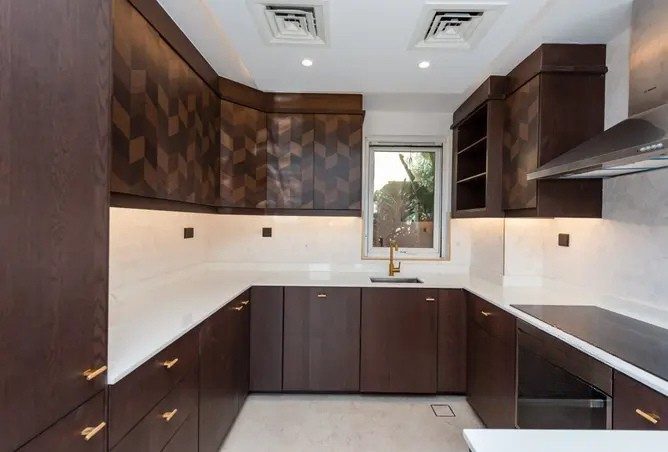
Crownstone-renovated kitchen ready for final walkthrough, Palmera, Arabian Ranches
Pre-Handover Checklist

The Handover & Snagging
Checklist

A practical, room-by-room checklist for what to inspect before you sign off and release final payment on a Dubai villa or apartment renovation — walk through it on site, or keep it open on your phone during the final walkthrough.

Before Final Payment

What Snagging Means,
And Why It's Worth Doing Properly

Snagging is the walkthrough you do once a contractor tells you the work is finished, but before you sign off and release the final payment. You go through the property methodically — testing switches, opening every door, checking every tap — and note anything that's incomplete, defective, or doesn't match what was agreed.

It matters because your leverage changes the moment final payment is released. Before that point, getting things fixed and getting paid are still linked; afterwards, you're relying on goodwill and whatever defects liability period was agreed in your contract. This page is built as a practical companion for that walkthrough — a structured checklist to work through room by room, rather than a general explanation of the process. For the fuller narrative on how to conduct the walkthrough itself, see our guide to inspecting your renovation before final payment.

How to Use This Checklist

  • Walk Room by Room, On Site Go through each section below in person, testing function rather than just checking appearance.
  • Note Everything, However Minor Anything that needs fixing goes on your list in writing, with a photo and its exact location.
  • Don't Sign Off Until It's Resolved Hold final payment until every agreed item is fixed, or a written, dated commitment to fix it is in place.
The Checklist

Walk Every Room,
Test What Matters

Work through each section below in person during your final walkthrough. Test function, not just appearance — a switch that looks fine but doesn't work is still a snag. Where something doesn't apply to your property, simply skip it.

Kitchen

7 Checks
  • Cabinet doors and drawers align evenly, close flush, and soft-close correctly where specified
  • Worktop joins are level, tight, and properly sealed with no visible gaps
  • Sink and mixer tap are installed level, running freely, with no leaks under the cabinet
  • Every appliance is installed, powered on, and functioning — oven, hob, extractor, dishwasher
  • Extractor hood vents correctly to the outside if ducted was specified, not just recirculating
  • Backsplash tiling is level with consistent, fully-filled grout lines
  • Under-cabinet lighting and all kitchen sockets are tested and working

Bathrooms & Wet Areas

7 Checks
  • Silicone sealant lines at every wet-area junction are clean, continuous, and free of gaps
  • Tiles show no lippage at the edges, and grout lines are a consistent width and colour throughout
  • Shower screens and enclosures are plumb, seal properly, and don't leak onto the floor outside
  • Water pressure is consistent and adequate at every tap, shower head, and mixer
  • Waste and overflow drains clear quickly with no gurgling, pooling, or slow drainage
  • Extractor fan runs on its switch and actually vents to the outside, not just into the ceiling void
  • WC flushes fully, refills correctly, and doesn't run continuously after flushing

Flooring

6 Checks
  • No hollow-sounding tiles when tapped gently — a common sign of poor adhesion underneath
  • Grout lines are a consistent width and colour, fully filled with no cracking or gaps
  • Transitions and thresholds between flooring types are flush, with expansion joints properly filled and finished
  • Skirting boards are tightly fitted with clean, filled joints at every corner
  • No visible scratches, chips, dents, or stains across finished flooring
  • Engineered wood or laminate flooring has no visible gaps or lifting at the joints

Walls, Paint & Ceilings

6 Checks
  • Paint finish is even in coverage and sheen, with no patchy, thin, or roller-mark areas
  • Cut-in lines at ceilings, corners, and skirting boards are straight and clean
  • No visible nail pops, hairline cracks, or filler patches showing through the paint
  • Ceilings are level and even, with no sagging, staining, or uneven texture
  • Colour and finish match the agreed sample or specification exactly, not just approximately
  • Touch-up areas blend seamlessly and aren't visible as a different sheen or shade under daylight

Doors, Windows & Ironmongery

6 Checks
  • Every door opens, closes, and latches smoothly without sticking, dragging, or scraping the floor
  • Handles, hinges, and locks on every door and window operate smoothly with no play or stiffness
  • Gaps around door frames are even on all sides and properly finished with architrave
  • Windows open, close, and lock securely, with intact seals and no draughts
  • Wardrobe and built-in joinery doors are aligned, level, and soft-close where specified
  • Keys, remotes, or access fobs for every lock have been handed over and tested

Electrical & Lighting

6 Checks
  • Every socket in every room has been tested with a real device, not just visually checked
  • Every switch operates its correct light or circuit, with no mismatched or reversed switching
  • Dimmer switches, where specified, dim smoothly through their full range without flickering
  • Light fixtures are installed securely and evenly aligned where positioned in a row
  • The distribution board is labelled clearly, and each circuit matches its label
  • Outdoor and wet-area sockets and fittings are properly rated and sealed for their location

Plumbing & MEP

6 Checks
  • AC airflow is even and adequately cool throughout each room, not just close to the vent
  • Thermostats and AC controls respond correctly and promptly in every zone
  • No visible leaks, damp patches, or corrosion at pipework under sinks or around risers
  • The water heater delivers hot water at a consistent temperature and pressure
  • No unusual noise from pumps, AC units, or plumbing when everything is running together
  • Access panels for MEP equipment are properly fitted, sealed, and reachable for future maintenance

External Areas & Landscaping

6 Checks
  • Outdoor tiling and hardscaping are level with a proper fall so water drains away, not inward
  • Pool equipment, where applicable, runs correctly and the water is clear and properly balanced
  • Outdoor lighting fixtures all function correctly and are properly weatherproofed
  • Irrigation runs on schedule and reaches every planted area without pooling or dry patches
  • Planting and landscaping match the agreed design and plant specification
  • Boundary walls, gates, and fencing are properly finished and operate smoothly
If You Find Issues

What to Do When
Something Needs Fixing

Finding items on your walkthrough isn't a confrontation — it's a normal, expected part of closing out any renovation properly. Here's how to handle what you find, step by step.

01

Photograph & Document Everything

Photograph every issue you find and note its exact location — a dated photo is far harder to dispute later than a memory of what was said on a walkthrough.

02

Put It in Writing

Compile every item into a single written snag list shared with your contractor, rather than relying on a verbal conversation. This becomes the reference document both sides work from until it's closed out.

03

Understand the Defects Liability Period

Every renovation contract should specify a defects liability period after handover — the window during which the contractor remains responsible for fixing issues that emerge. Crownstone builds this into every project; confirm the same is written into yours before you sign off.

04

Hold Final Payment Until Resolved

If your contract structure allows it, don't release the last instalment until the agreed items are fixed, or you have a written, dated commitment covering exactly what will be done and by when.

FAQ

Common
Questions

Have a question about your own handover that isn't answered here? Get in touch and we'll talk it through.

Many homeowners complete this checklist themselves — most items are simple visual and functional checks that don't require special equipment or training. For larger properties, or where you'd value an independent second opinion, a professional snagging inspector is worth considering. Either way, the goal is the same: a written, room-by-room list that you and your contractor both agree on before final payment.

Start by comparing the item against your written scope of works, drawings, and material specification — that document should settle most disagreements, not opinion on either side. Where it's genuinely a judgment call, note it in writing and agree a fair resolution before final payment is released, rather than leaving it unresolved on the promise of a later fix.

It depends entirely on the size and complexity of the project, so there's no fixed number to expect or aim for. What matters more than the count is that every item is documented, agreed in writing, and tracked through to resolution — a short list of items that never gets fixed is a bigger problem than a longer list that's being actively closed out.

The same walkthrough discipline applies, though what you're checking against differs slightly — a developer handover is checked against the original sales specification, while a renovation snag list is checked against your agreed scope of works. Many of the room-by-room checks on this page, such as tile lippage, door alignment, socket testing, and water pressure, are relevant to either situation.

Planning a Renovation?

Every Crownstone Project Ends With
A Structured Walkthrough

If you're earlier in the process and haven't started yet, tell us about your property and scope, or browse our renovation services to see how each stage — including handover — is managed.

Chat on WhatsApp