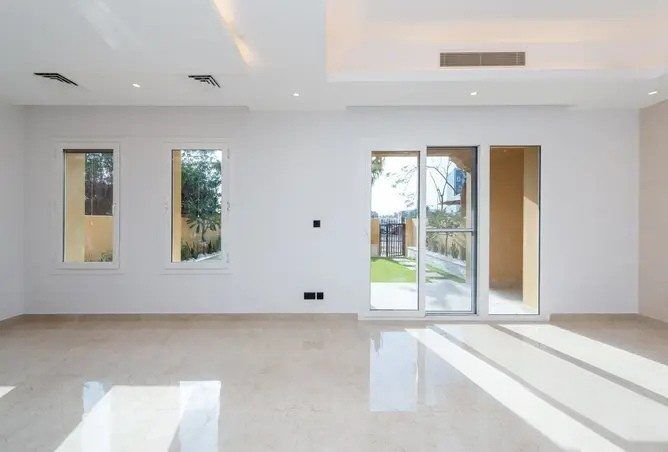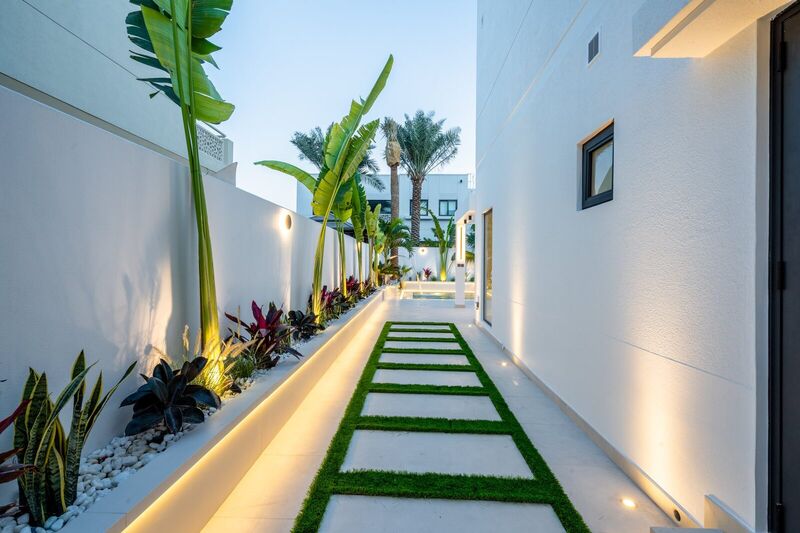
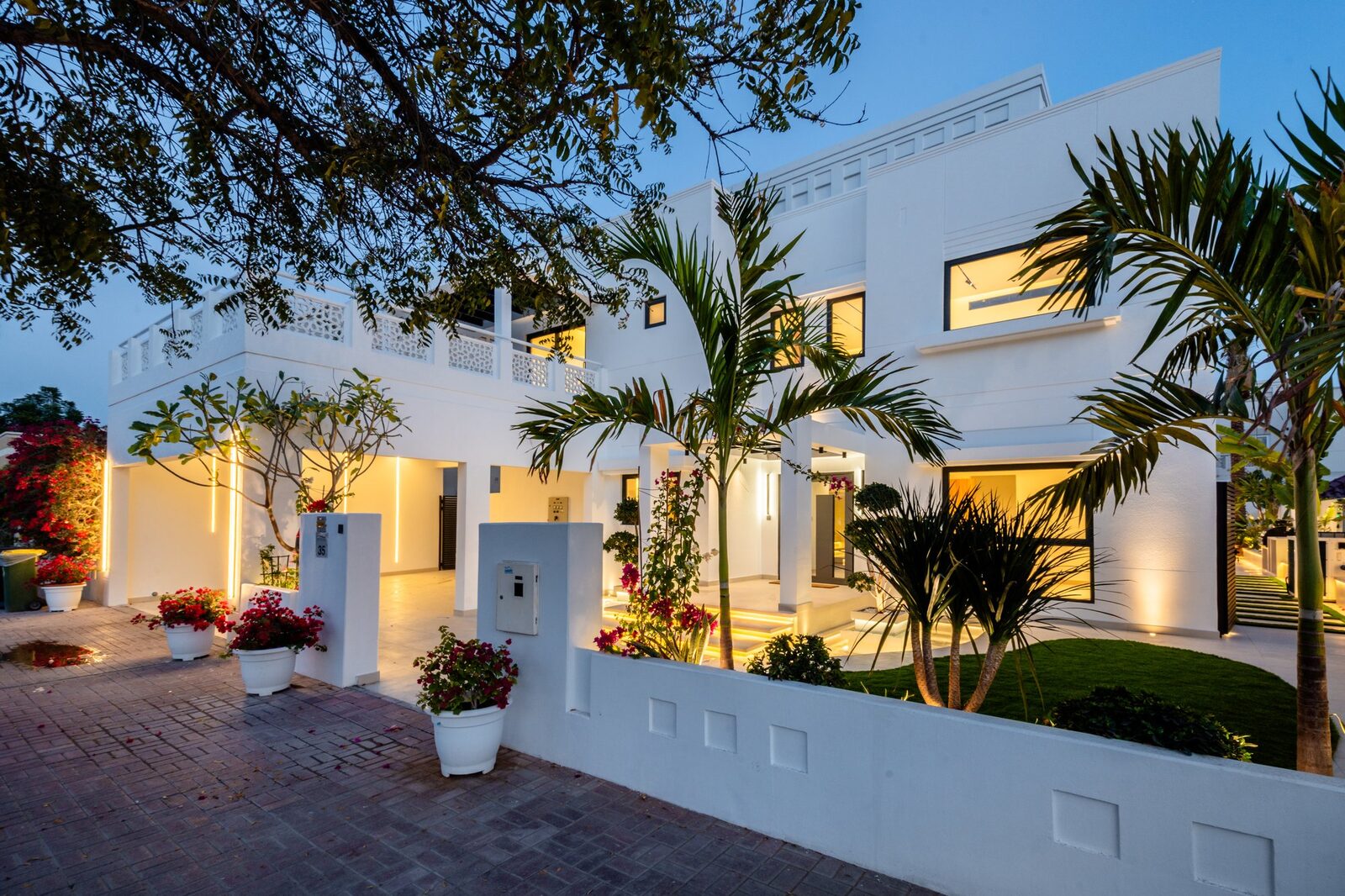
Walk into almost any villa resale listing in The Meadows or Arabian Ranches and you'll see the same two flooring options fighting for the entrance hall: honed natural marble, or large-format porcelain that's been printed to look almost exactly like it. From two metres away, most people can't tell the difference. After two Dubai summers, everyone can.
Flooring is one of the largest single line items in a villa renovation simply because of the area involved — a 4,000 sqft villa might have 3,000+ sqft of floor once you exclude walls and cabinetry. Getting the porcelain-versus-marble decision right, room by room, has a real effect on both your budget and how much maintenance your home demands for the next 15 years.
The short answer
For the majority of a villa, porcelain is the more practical choice in Dubai's climate — it doesn't need sealing, resists scratches from sand tracked in from the garden or pool deck, and won't etch from hard water or cleaning products. Marble still earns its place in formal entrances and statement living areas, where its natural veining, depth and genuinely cool underfoot feel are hard to replicate — provided you go in accepting the sealing and care routine that comes with it.
How each material actually behaves in Dubai's climate
Heat underfoot
Marble stays noticeably cooler to the touch than porcelain, even in the same room, because of how efficiently it conducts heat away from your foot. This is exactly why marble entrances and formal living rooms feel so pleasant even in August. Porcelain, being denser and a poorer conductor, retains more surface warmth — though in an air-conditioned interior the difference is minor unless the floor sits under direct, unfiltered glass all day.
UV exposure and fading
Full-height glass doors onto a garden or pool are standard in most Meadows and Arabian Ranches villas, and Dubai's UV index is high year-round. Porcelain's colour is fired into the body of the tile and is essentially immune to fading. Natural marble can very slowly lighten or develop a slightly different patina in a permanently sun-struck strip near glazing — usually cosmetic, rarely dramatic, but worth knowing before you commit a full open-plan floor to a single slab batch.
Hard water and etching
Dubai's tap water carries a meaningful mineral load, and marble is a calcium-based stone — it reacts with acids. Lemon juice, vinegar-based cleaners, wine, and even some standard bathroom or kitchen cleaning products can leave a dull etch mark on polished marble within seconds. Porcelain is chemically inert and shrugs off all of it.
Scratch and impact resistance
Villas with gardens, pools, and pets bring in sand and grit daily. Porcelain, fired at extremely high temperatures, is significantly harder and more scratch-resistant than marble, which is a relatively soft stone (roughly 3-4 on the Mohs scale versus porcelain's 7-8). Over years of foot traffic, marble in high-traffic zones will show fine scratching that eventually needs professional honing to restore.
| Factor | Porcelain | Natural Marble |
|---|---|---|
| Porosity | Near-zero, no sealing needed | Porous — needs sealing every 12-18 months |
| Scratch resistance | High (Mohs 7-8) | Moderate (Mohs 3-4) |
| Hard water / etching | Immune | Etches with acids, hard water spots |
| Cost per sq ft (installed) | AED 70 – 120 | AED 180 – 350 |
| Underfoot feel | Warmer, more neutral | Noticeably cooler |
| Best rooms | Kitchens, bathrooms, hallways, whole-villa | Entrance foyer, formal living, feature walls |
⚠ Never use acidic cleaners on marble
Lemon-scented sprays, vinegar solutions and many "all-purpose" bathroom cleaners will etch polished marble on contact. Stick to a pH-neutral stone cleaner, and reseal every 12-18 months in high-traffic areas.
Cost comparison in Dubai
Using current Dubai supply pricing, porcelain typically installs at AED 70-120 per sq ft depending on format size and finish, while natural marble runs AED 180-350 per sq ft depending on the stone's origin, veining and slab grade. Across a full 4,000 sqft villa, that gap alone can move your flooring budget by well over AED 300,000 if marble is specified throughout versus porcelain. Most of our clients solve this by using marble only in the entrance and principal living spaces, and porcelain everywhere else — you get the visual statement where it matters most, without paying marble pricing on bedroom and hallway floors nobody photographs.
💡 Model both options for your villa
Our Renovation Cost Calculator lets you toggle between flooring tiers room by room, so you can see exactly what a marble entrance versus an all-porcelain floor does to your total budget before you commit.
Where each material makes sense in a Meadows or Arabian Ranches villa
In the renovations we've delivered across The Meadows and Arabian Ranches, the pattern that works best is rarely "all one material." A large-format porcelain slab (often in a subtle stone-look print) runs through kitchens, hallways, bedrooms and bathrooms where daily durability matters most — see our guide to kitchen worktop materials for how this pairs with stone counters. Marble is reserved for the entrance foyer, a feature staircase, or a formal living room where guests actually stand still long enough to appreciate it. Outdoors, on pool decks and terraces, neither polished material is appropriate for safety reasons — see our separate guide on outdoor tiles that survive a Dubai summer for slip-rated alternatives.
Not Sure Which Floor Fits Your Villa?
Our cost calculator models porcelain and marble side by side, room by room, so you can see the real budget impact before you decide.
Try the Cost CalculatorFrequently asked questions
Is porcelain or marble better for a Dubai villa floor?
For most of a villa, porcelain is the more practical choice in Dubai — it doesn't need sealing, resists scratches from tracked-in sand, and won't etch from hard water or cleaning products. Marble still wins on prestige and cool underfoot feel in a formal entrance or living room, provided you accept the sealing and care that comes with it.
Does marble flooring get too hot in Dubai?
Marble stays noticeably cooler underfoot than porcelain in direct sun because of how it conducts and releases heat, which is why it's popular in entrances and living areas. Both materials will still feel warm on a west-facing floor with all-day glass exposure unless the glazing has solar film or the floor is shaded.
How much does marble flooring cost per sq ft in Dubai?
Marble flooring typically runs AED 180-350 per sq ft installed in Dubai, depending on the stone's origin and finish, compared with AED 70-120 per sq ft for porcelain. Our renovation cost calculator can model both across your full villa.